Morning everybody, thanks so much for reading. I’m your lot today because Maureen’s been away, in a gite in rural France, near Bergerac, where the internet connection was unstable/intermittent/dodgy and she sensibly decided that stressing over the blog was not the best way to relax.
That gives me carte blanche to riff away on whatever takes my fancy and I’m going to start with Jim Barnes. Wasn’t he in Dallas way back when? He probably was but this Jim Barnes started life in the far west, in Cornwall and ended up with four – yes, four – major championships. Of course there wasn’t such a thing as a major in his day, although they were all big events and the Masters wasn’t even a twinkle in Bob Jones’s eye and no one had come up with the concept of the Grand Slam.

Jim Barnes in putting pose. Pic from The Story of American Golf by Herbert Warren Wind, published by Knopf.
It was Harry Hall who got me thinking about Jim because he (Harry) zoomed up the leaderboard at the Travelers Championship with a final round of 65, five under par. Like Jim, Harry’s from West Cornwall GC, Lelant (I think – please feel free to correct my geography and anything else that needs correcting; it’s a long list!) and is a long, lanky Englishman making his name in America. Not so rare these days, what with golf scholarships and aeroplanes and airports everywhere but Jim, also long and lanky (about 6 foot 4 in old money), headed for fame and fortune in America in the early 1900s. I suppose he reasoned, correctly, that golf was a lot safer than fishing…
Anyway, Jim’s golf made the journey with him and he won the first two editions of the USPGA Championship, in 1916 and 1919 (the gap was because of World War I). First he beat Jock Hutchison, by one hole, then Fred McLeod by 6 and 5 – the championship didn’t become a stroke play event until 1957. Wind wrote: “Hutchison, along with Barnes and Hagen, formed the triumvirate that dominated American golf during and just after WWI.”
Walter Hagen would be right up there with the most flamboyant performer of any era, a lover of the high life but a ferocious competitor. Once, out on the town before a big match, he was told that his opponent was already in bed. “That’s as may be,” Walter said, “but he ain’t sleeping…” You get the picture.
In the US Open of 1921, Barnes won the title, nine shots ahead of Hagen and McLeod. The following year, at Royal St George’s, the Cornishman finished one shot behind Hagen in the Open. Professionals, however successful, were banned from the clubhouse, so the American arrived every day in his Rolls Royce and had grand picnics in the car in front of the clubhouse, as ostentatious as a protest could be.
In 1925, at Prestwick (Old), Barnes won the Open, a shot ahead of Archie Compston and Ted Ray, so setting a standard that few Englishmen, let alone Cornishmen, have reached since.

The AGW’s Michael Williams Hogget at Edgbaston: Roddy Williams (left), Michael’s son, presents James Nursey with the trophy. Not a Cornish golfer in sight!

Leafy Edgbaston, an oasis in the heart of Birmingham. The only problem is getting there!
Many years later, reminiscing about his US Open win, Barnes recalled that Warren Harding, the president (of the United States) and a golf tragic, was there every day, as was vice president Calvin Coolidge. Coolidge was notoriously taciturn and somebody bet Dorothy Parker, renowned for her charm as well as her sharp wit, that she couldn’t get him to say more than three words to her at dinner. She got nowhere and in desperation told Coolidge about the bet. At last he uttered.
“You lose,” he said.
Parker got her revenge a few years later. Told that Coolidge, president from 1923 to 1929, had died, she didn’t miss a beat: “How could they tell?”
Anyway, at the Travelers, it was Tommy Fleetwood who died a death, hurtful, embarrassing even but thankfully not terminal. A shot ahead with one hole to play, he lost out to Keegan Bradley, who had a brilliant birdie to the Englishman’s limp bogey.
That’s one way of putting it but the reality was beyond dramatic, properly compelling stuff that no one could have predicted. Fleetwood looked certain to win at last in America but Bradley, the US Ryder Cup captain, one of those irritating players who has a limpet-like doggedness and a flair for the unlikely, holed a couple of monstrous putts to keep himself in the contest and went for the jugular when Fleetwood gave him the opening.
Tommy, gutted, was gracious as ever and even though he looked crushed I’m inclined to back him to win the Open at Portrush next month. He was runner-up to Shane Lowry in 2019, well behind in the end in weather most foul and if I don’t put my money on him (usually the kiss of death and a guaranteed missed cut), he might have a chance.
Anyway, he won $1,760,000 for sharing second place with Russell Henley, who had a delightfully streaky chip in from gnarly rough at the last. Bradley won a mere $3,600,ooo, which really just goes to show how bonkers the whole thing has become.
Meanwhile, in Texas, Minjee Lee, of Australia, was winning the KPMG Women’s PGA Championship, her third major title. She won $1,800,000, a huge amount for the women – and not so long ago for the men too. Only three players broke par in wild, windy conditions on what looked like a ghastly golf course with not very many spectators. PGA Frisco is the new home of the PGA of America so we’ll probably be seeing a lot of it but it didn’t look very user friendly to me. Am I just getting old and jaded? Perhaps. Perhaps not.
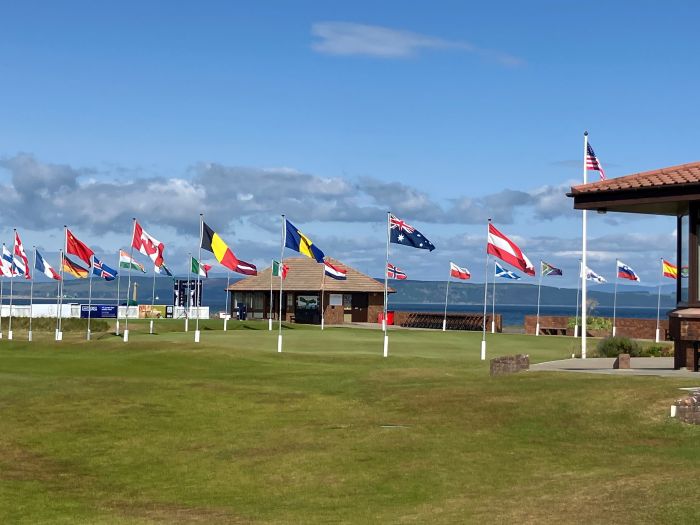
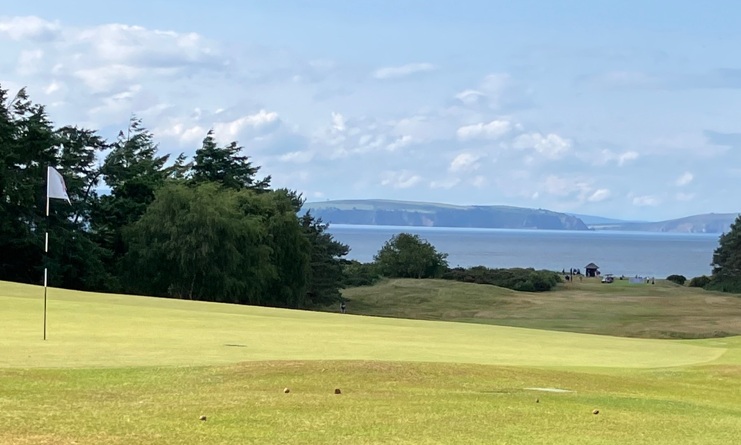
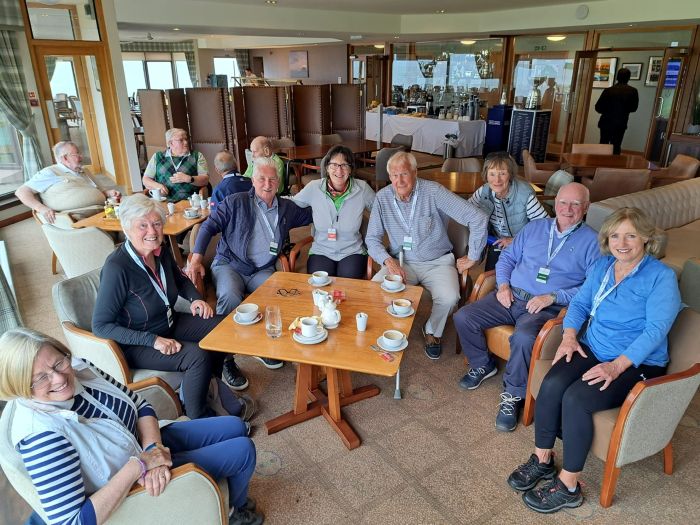
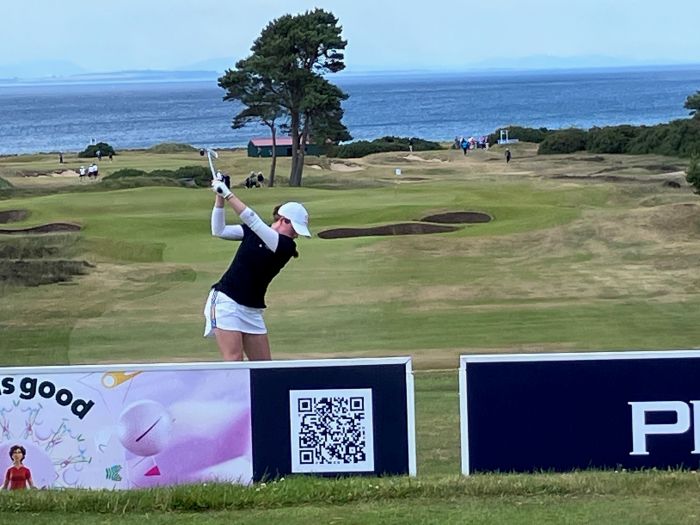
Let’s have a laugh to finish. Cynthia May sent this comment on last week’s rant about apostrophes: “The R&A’s Amateur Women’s Championship [sic] held last week at Nairn GC had billboards, notices, merchandise and signs on everything and not an apostrophe once on Women’s.
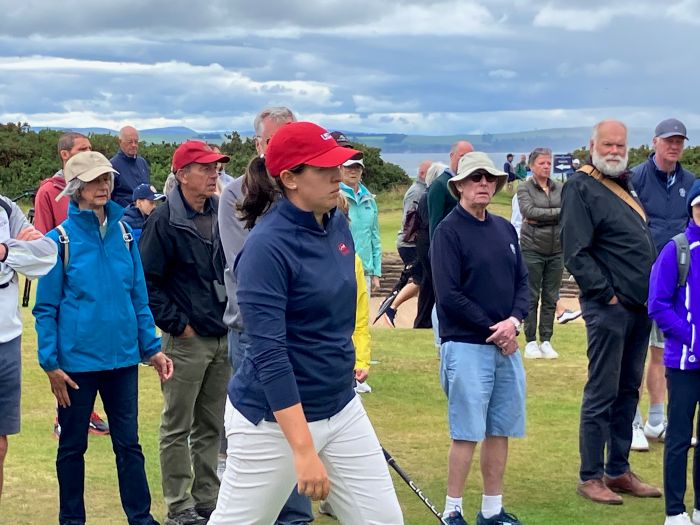
“My friend who was a volunteer and was given a Championship woolly hat as a thank you, spent the evening before the start sewing in an apostrophe! I have photos!”
Oh, we need to see those please Cynthia. Brilliant.

Yet another birthday and this card made this old doll laugh out loud.